Baked Alaska Saint Pierre
From the kitchen of CarlyBaked Alaska meets French elegance with this stunning frozen dessert. Layers of marmalade-swirled vanilla ice cream and bright orange sorbet get crowned with a delicate sponge cake, then torched golden. Citrus, butter, and Grand Marnier create pure frozen-then-toasted bliss.
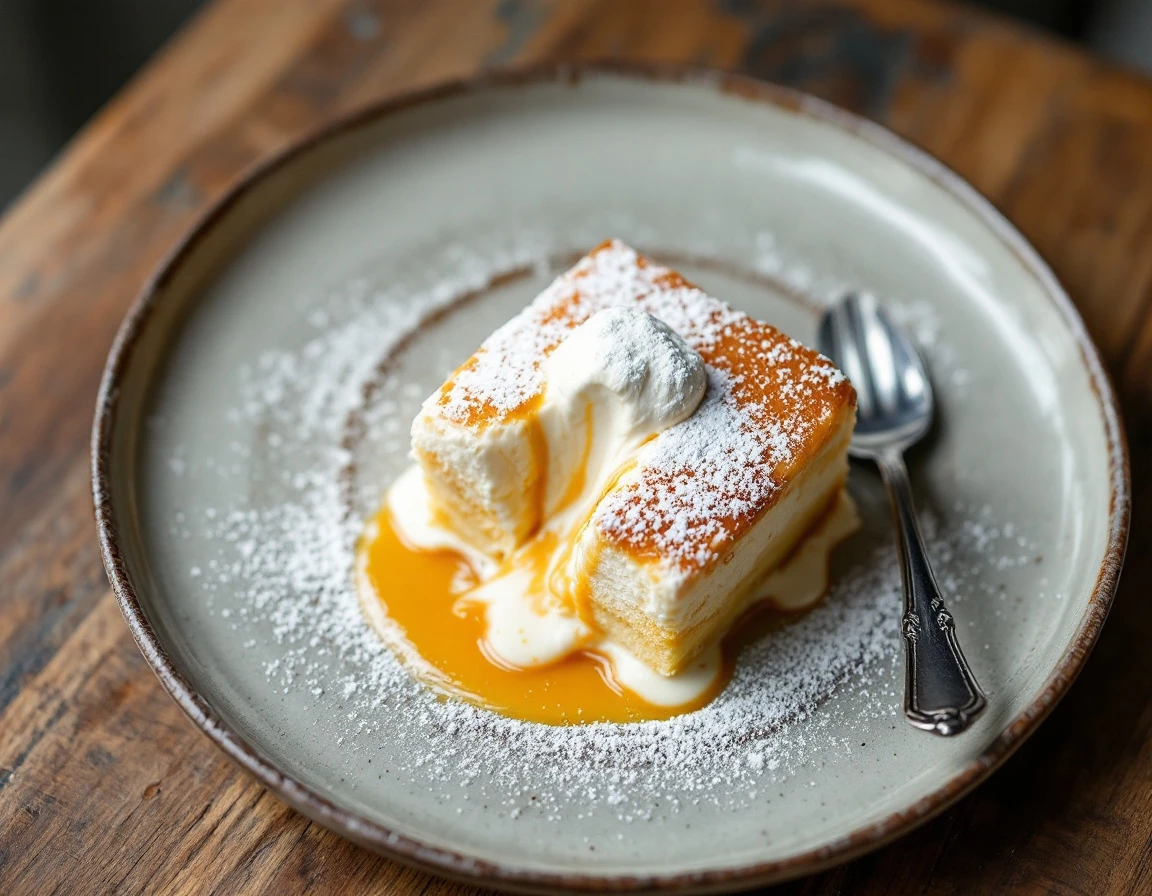
Baked Alaska is theater, and this version tips the spectacle toward citrus. A thin génoise sponge, steeped in Grand Marnier, cradles vanilla ice cream mixed with marmalade and bright orange sorbet, then gets wrapped in meringue and torched until the peaks brown. The texture play is everything: cold cream against warm caramelized sugar, delicate cake, the snap of the meringue shell.
- Prep
- n/a
- Cook
- n/a
- Total
- n/a
- Servings
- 4
- Difficulty
- medium
Ingredients
4 servings
- 1/3 cupsweet orange marmalade
- 1qt superpremium vanilla ice cream, softened slightly
- 1 pintorange sorbet, softened slightly
- 1/2 cupcake flour
- 1/4 tspsalt
- 3 largeeggs at room temperature for 30 minutes
- 1/2 cupsugar
- 2 tspfinely grated fresh orange zest
- 2 tspGrand Marnier
- 3 tbspunsalted butter, melted and cooled
- 7 largeegg whites
- 1/4 tspcream of tartar
- 1 1/4 cupsugar
- 1 tspvanilla
- 1eggshell half, cleaned
- 2 tbspGrand Marnier
- 2round cake pans; a 9- by 2-inch round cake pan; a round cake pan or plate at least 10 inches in diameter
Instructions
Stir the marmalade into the vanilla ice cream with a wooden spoon until evenly combined, then spread the mixture into one 8-inch cake pan. Spread the sorbet into the second 8-inch cake pan. Cover both pans with plastic wrap and freeze until firm, at least 3 hours.
Position an oven rack in the middle and preheat to 350°F. Butter the 9-inch cake pan, line the bottom with a round of parchment or wax paper, then butter the paper as well.
Into a bowl, sift together the flour and salt.
Set a large metal bowl over a pot of simmering water and add the eggs and sugar. Whisk constantly and gently until the mixture feels lukewarm and the sugar has dissolved.
Lift the bowl off the pot, add the zest and Grand Marnier, then beat with an electric mixer on high speed until the mixture is very thick, pale, and tripled in volume, about 7 minutes in a stand mixer or 10 minutes with a handheld. If the bowl is tall and narrow, transfer the batter to a large wide bowl to make folding easier. Resift the flour and salt over the eggs in 2 batches, folding gently but thoroughly after each addition. In a small bowl, fold the melted butter into about 1 cup of the batter until just combined, then fold that butter mixture back into the remaining batter until just combined. Spread the batter in the buttered pan and smooth the top.
Bake until a wooden pick or skewer inserted in the center comes out clean, about 15 minutes. Let the cake cool in the pan on a rack for 5 minutes, then run a thin knife around the edge and invert the rack over the cake. Flip the cake onto the rack and cool completely, then peel off the paper.
Using a long serrated knife, cut the cake horizontally in half to form 2 layers. Wrap each layer tightly in plastic wrap and freeze for 30 minutes.
Place one cake layer on a plate or inverted cake pan that is at least 10 inches in diameter but still fits in your freezer. Working quickly and with a kitchen towel nearby, dip the pan holding the vanilla ice cream mixture into a large bowl of hot water for 5 to 7 seconds to loosen it, then unmold the ice cream directly onto the cake layer. Set the second cake layer on top, cut side up. Loosen and unmold the sorbet in the same way, placing it on top of the second cake layer, then freeze the assembled cake until firm, about 1 hour.
In a large bowl, beat the egg whites with a pinch of salt at moderately high speed until foamy. Add the cream of tartar and continue beating until the whites hold soft peaks. Pour in the sugar a little at a time, beating continuously, until the whites hold stiff, glossy peaks. Beat in the vanilla.
Move an oven rack to the lower third of the oven and preheat to 450°F.
Set the frozen cake, still on its plate or inverted cake pan, onto a parchment-lined baking sheet. Spread the meringue over the entire surface, keeping it at least 1 inch thick and mounding it generously on top. Press a tablespoon into the center of the meringue to create an indentation deep enough to hold the eggshell half. Bake until the edges are lightly browned, about 5 minutes. Using 2 metal spatulas, carefully transfer the cake to a serving plate and nestle the eggshell into the indentation. Pour the 2 tablespoons of Grand Marnier into the shell and ignite it carefully with a kitchen match. Spoon the flaming liqueur evenly over the meringue to brown it a little further, then remove the eggshell and serve immediately.
Tips from the kitchen
- Soften the ice cream and sorbet just enough to swirl and spread without melting into soup, around 10 minutes at room temperature. You want it spreadable, not soft-serve.
- The hot sugar bath for the eggs is non-negotiable. It stabilizes the yolks, raises the temperature safely, and ensures the meringue won't break. Whisk constantly and test with your finger if unsure, it should feel lukewarm.
- Assemble the whole thing on a cold plate (chill it first) and work fast. The ice cream is your timer, freeze anything longer than 20 minutes before the final meringue coat and torch.
Variations
- Skip the marmalade and mix the vanilla ice cream with candied lemon peel and a touch of honey for a more subtle citrus profile.
- Use chocolate cake instead of génoise and fill with dark chocolate ice cream and raspberry sorbet, then meringue as written.
- Make a mini version in individual bowls: smaller cake rounds, scoops of ice cream, meringue torched to order at the table.
Make ahead and storage
Freeze any leftover assembled Alaska, uncovered, until the meringue is solid, then wrap tightly in plastic. It keeps frozen up to 2 days. Do not refrigerate a fully assembled Alaska; it will weep. Leftover cake and ice cream components are best eaten separately.