Yaki Udon
From the kitchen of CarlyJapanese stir-fried udon with cabbage, shiitake, and a sweet-savory soy-mirin glaze. The thick chewy noodles soak up the sauce while staying slippery. Vegetarian-easy, weeknight-fast, ready in 20. Don't drain the noodles too thoroughly. A little water clinging helps the sauce loosen and coat instead of clumping.
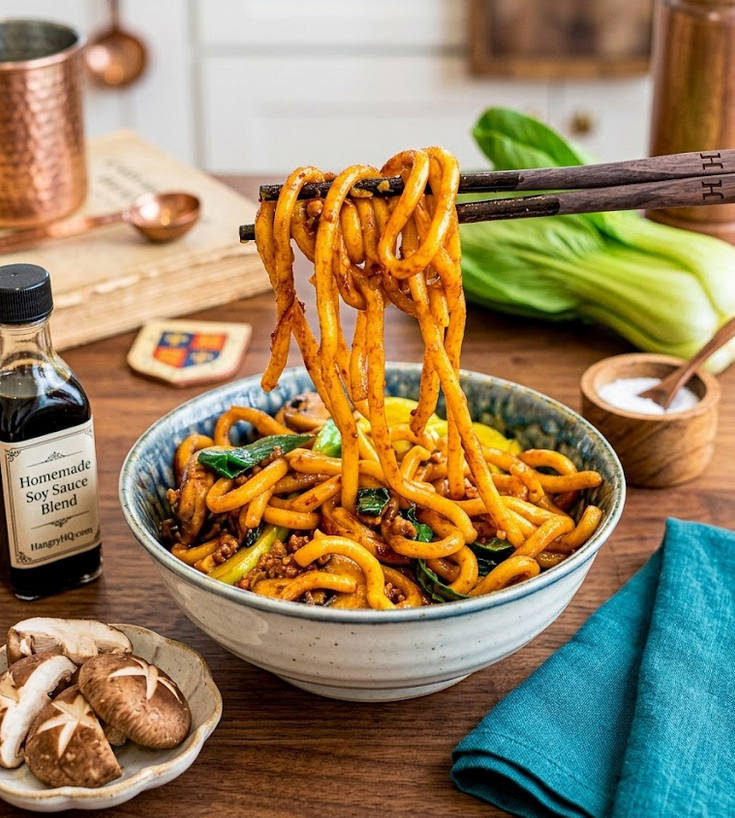
Yaki udon hits different when the noodles get properly sticky and charred at the edges, which happens fast in a screaming hot wok. The trick is cooking your udon to just al dente, then letting the sauce cling to every strand while the vegetables soften and catch color. Twenty minutes from stovetop to bowl, and you've got something that tastes like it took way longer to pull off.
- Prep
- 5 min
- Cook
- 15 min
- Total
- 20 min
- Servings
- 4
- Difficulty
- easy
Ingredients
4 servings
- 9 oz(250 g)udon noodles (frozen, fresh, or dried)
- 2 tbsptoasted sesame oil (divided)
- 1yellow onion, sliced
- 1/4 headgreen cabbage, sliced thin
- 10shiitake mushrooms, sliced
- 4scallions, sliced (whites and greens separated)
- 4 tbspmirin
- 2 tbspsoy sauce
- 1 tbspcaster or granulated sugar
- 1 tbspWorcestershire sauce
Instructions
Bring a large pot of water to a boil. Add 250ml of cold water and the udon noodles together (the cold water helps thick udon cook through evenly).
Cook per the package: 2 minutes for fresh or frozen, 5 to 6 minutes for dried, until just al dente.
Drain in a colander and rinse briefly under cold water to stop the cooking. Set aside.
While the noodles cook, whisk the mirin, soy sauce, sugar, and Worcestershire sauce in a small bowl. This is your sauce.
Heat 1 tbsp of the sesame oil in a wok or large nonstick skillet over high heat.
Add the sliced onion and cabbage. Stir-fry 4 to 5 minutes, until the cabbage softens and starts to char at the edges.
Add the shiitake mushrooms and the scallion whites. Stir-fry 1 minute more.
Add the cooked noodles and the remaining 1 tbsp sesame oil.
Pour the sauce over everything. Toss with tongs or two spatulas for 2 minutes, until the noodles are evenly coated, sticky, and piping hot.
Pull off the heat. Scatter the scallion greens over the top.
Serve immediately in deep bowls.
Tips from the kitchen
- Cold water in the pot with udon levels out cooking time so thick noodles don't turn to mush while the centers catch up. Add it right at the start, not as a rescue move.
- Don't skip rinsing the cooked noodles briefly under cold water, it stops carryover cooking and keeps them from clumping while you work on the vegetables.
- The sauce is your MVP here. Whisk it in a bowl before you touch the wok so it's ready to go the moment everything comes together, no scrambling.
- High heat and two spatulas or tongs matter for tossing, they help coat every noodle evenly and build char without breaking anything apart.
Variations
- Protein swap: add cubed tofu or thin slices of chicken breast to the vegetables, let them cook through before adding the noodles.
- Spicy route: whisk in 1 to 2 tsp of sriracha or chili oil into the sauce base, scale to your heat preference.
- Seafood version: replace the mushrooms with sliced squid or shrimp, add them to the pan after the onion and cabbage soften, cook 2 minutes until opaque before the noodles go in.
- Crispy texture: finish with a scatter of crushed peanuts, cashews, or toasted sesame seeds over the scallion greens.
Make ahead and storage
Leftovers keep in an airtight container in the fridge for up to 3 days, though the noodles firm up as they cool. Reheat gently in a wok over medium heat with a splash of water to loosen them back up, or eat cold if that's your style.
Substitutions
- udon noodles to soba, ramen, or even spaghetti. Soba is whole-wheat-leaning; ramen is chewier. Spaghetti is the desperate-times move; cook al dente first.
- shiitake mushrooms to cremini, oyster, or maitake mushrooms. All work. Cremini is the most common; maitake gets the most umami when crisped.
- Worcestershire sauce to Japanese tonkatsu sauce or extra soy + a dash of fish sauce. Tonkatsu sauce is the more traditional choice in Japan. Worcestershire is the easier-find substitute.
Pairs well with: A side of pickled cucumber or radish, A simple miso soup to start, Cold sake, Japanese beer, or green tea