Blind-Baked Pie Crust
From the kitchen of CarlyA proper pie crust starts with cold butter smashed into flour, then just enough ice water to bring everything together. This method gives you a flaky, tender shell that actually tastes like butter. Blind bake it for custard tarts and cream pies.
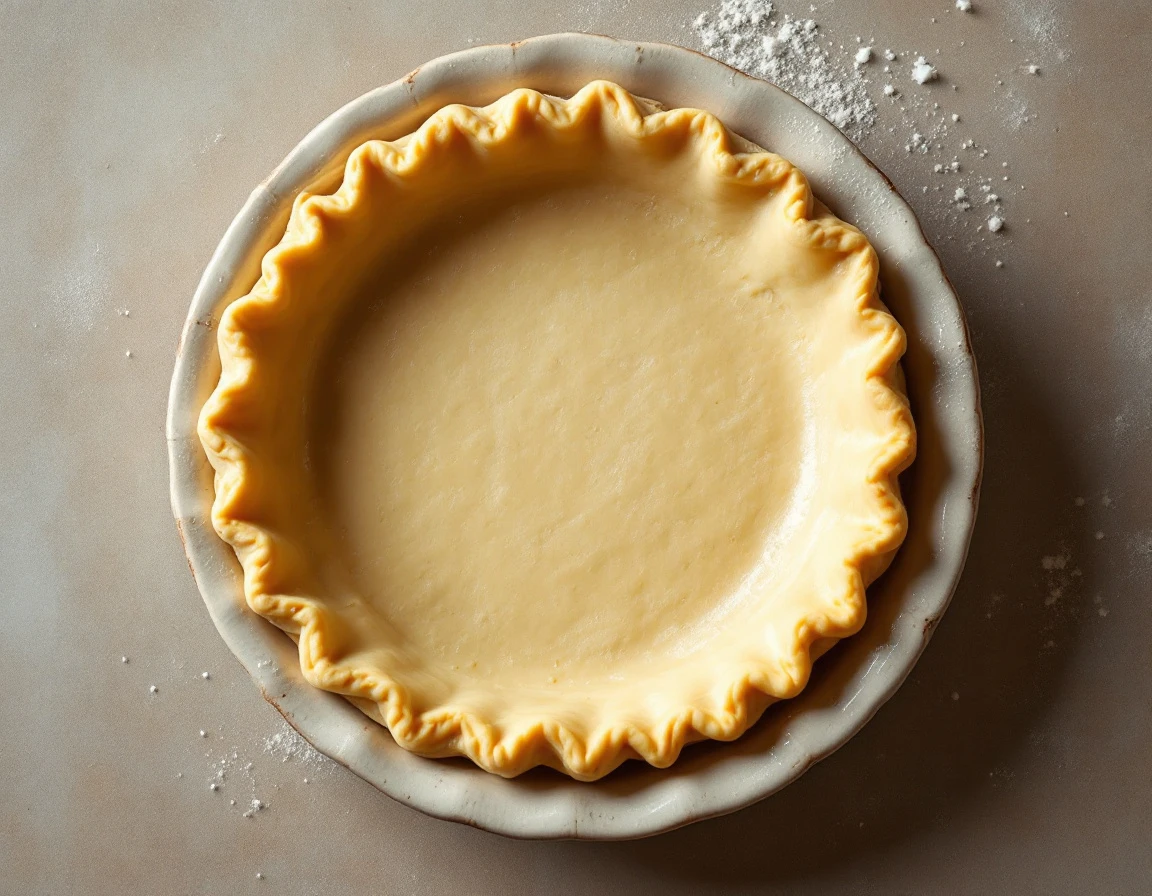
Laminated dough that actually stays flaky. The trick is smashing cold butter into thin sheets instead of rubbing it into flour, which means you get visible butter layers that puff during baking. Blind-baking locks in that crispness even under a wet filling, and the extra chill time is non-negotiable. Make two at once.
- Prep
- n/a
- Cook
- n/a
- Total
- n/a
- Servings
- 4
- Difficulty
- medium
Ingredients
4 servings
- 2 tbsp. granulated sugar
- 2 tsp. Diamond Crystal or 1 tsp. Morton kosher salt
- 2⅔ cups all-purpose flour, plus more for dusting
- 3 stick½ cups chilled unsalted butter
- 1cut into ½" pieces
Instructions
In a large bowl, whisk the sugar, salt, and 2 2/3 cups of flour together. Add the butter and, using your fingers, smash each piece flat into a thin disk. Take your time doing this; don't feel rushed to break butter into smaller pieces. Drizzle 2/3 cup of ice water across the surface as widely as possible and mix with a rubber spatula to bring everything into a shaggy mass.
Tip the dough onto a surface and work it together with your hands, pushing and flattening until the dough holds together when squeezed in your palm but some streaks of dry flour remain visible. Divide the dough into 2 portions.
Flatten 1 portion into an 8 inch diameter disk. Cut the disk into quarters, stack the pieces atop one another, and flatten with a rolling pin to about half the original height. By this point the dough should hold together with no dry spots remaining, with visible big flakes of butter showing throughout. Use a bench scraper or large knife to clean any clingy bits of dough off the surface. Dust the surface with flour, then dust the top of the dough with flour. Roll out to a 1/4 to 3/8 inch thick round. Wrap the dough around the rolling pin and transfer to a standard 9 inch diameter pie dish. Unfurl the dough into the dish, then lift the edges and let the dough slump down into the dish. Trim the overhang to an even 1 inch (there will be some excess). Fold the overhang under and crimp as desired. Cover and chill until very cold, at least 1 hour and up to 12 hours (cover tightly if chilling longer than 1 hour). Repeat the process with the remaining dough portion and another pie dish. Alternatively, form into a 1 1/2 inch thick disk, wrap in plastic, and chill up to 3 days (or freeze up to 1 month).
Position a rack in the middle of the oven and heat to 400°F. Lay 2 sheets of parchment paper over each chilled crust and fill with pie weights or dried beans (they should fill the dish completely). Set on a foil-lined rimmed baking sheet to catch any butter drips that would smoke up the oven otherwise. Bake until the edges turn golden brown and the bottom looks opaque (carefully lift a corner of the parchment to check), 30 to 35 minutes. Pull from the oven and drop the temperature to 300°F. Lift out the parchment and weights. Continue baking the crust until evenly chestnut brown all over, 10 to 15 minutes more. If you're baking both crusts, crank the oven dial back up to 400°F and let it preheat before repeating with the remaining crust.
Tips from the kitchen
- Smash each butter piece flat with your fingers, don't crumble it. Larger sheets of butter create better flakes than tiny pea-sized pieces.
- When you see streaks of dry flour after the first mixing, stop. Over-mixing here means tough crust. The lamination fold takes care of hydration.
- Roll between parchment or plastic wrap to prevent sticking and keep flour use minimal. Less flour dusted in means a more tender crust.
- Chill the dough in the dish for a full hour minimum. A cold crust won't slump during blind-baking and holds its crimp.
- If edges brown too fast during blind-baking, tent them loosely with foil for the last 10 minutes.
Variations
- All butter, no shortening. Some recipes mix shortening in for tenderness, but all butter gives you better flavor and crispness that actually develops.
- Vodka dough. Replace a few tablespoons of ice water with vodka, which evaporates faster and makes the crust even flakier without toughening.
- Whole wheat. Swap up to one-third of the all-purpose flour for whole wheat for nuttier flavor, though you may need an extra tablespoon of water.
- Savory version. Cut the sugar to 1 tablespoon, add a pinch of cayenne or white pepper, and use this base for meat pies or quiches.
Make ahead and storage
Wrapped well, an unbaked chilled crust keeps in the fridge up to 3 days. Frozen dough keeps up to 3 months and can bake straight from frozen, adding a few minutes to blind-bake time. Once blind-baked and cooled, store at room temperature up to 8 hours before filling.