Bill Gross's Burnt Orange Ice Cream
From the kitchen of CarlyCaramelized oranges transform into silky ice cream with burnt sugar depth and bright citrus notes. Whole fruit gets roasted until the skin blackens and sugars meld into bitter-sweet char, then churned into cream for something addictive and sophisticated.
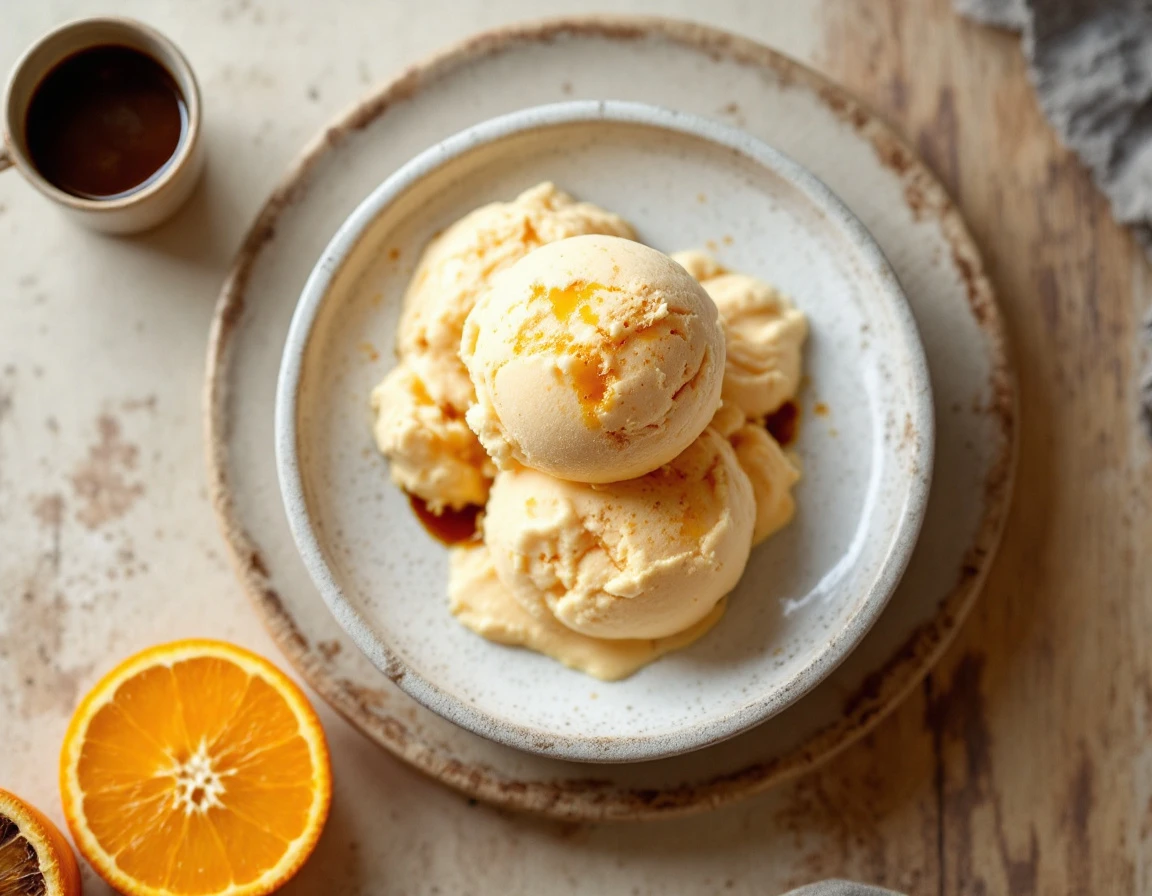
Caramelized orange peel and charred flesh melt into heavy cream, vanilla, and egg yolk for an ice cream that tastes burnt in the best way. The recipe asks for patience, a two-day commitment, and a baking pan that gets thoroughly coated in melted sugar. What emerges is haunting, bitter, and elegant.
- Prep
- n/a
- Cook
- n/a
- Total
- n/a
- Servings
- 4
- Difficulty
- medium
Ingredients
4 servings
- 2 1/2 cupgranulated sugar
- 4 tbspunsalted butter, at room temperature
- 2 largenavel oranges
- 3 cupheavy cream
- 2/3 cuphalf-and-half
- 1Seeds scraped from 1 vanilla bean , or 1 tablespoon pure vanilla extract
- 2 largeegg yolks
Instructions
A day ahead, get your oranges ready: position a rack in the center of the oven and preheat to 450°F.
Spread 1/2 cup of the sugar across a plate. Coat the oranges all over with the butter, then roll them through the sugar until well covered.
Tip the remaining sugar from the plate into an 8-inch square baking pan and shake it so it covers the bottom evenly. Nestle the oranges in the pan and bake for 15 to 20 minutes, nudging them around once to break up any stubborn unmelted sugar, until they begin to color and the sugar in the pan starts to melt.
Pull the pan from the oven, leaving the oven on. With tongs and a sharp knife, carefully cut each orange into quarters. Lay the quarters skin side up in the pan and bake until the peel turns dark brown, about 35 minutes. Allow them to cool slightly before handling.
Peel away the skin from 4 of the browned quarters, discarding the pulp inside. Leave the remaining 4 quarters completely intact.
In a food processor, combine the reserved peel, the 4 intact quarters, the caramelized sugar from the pan, and the remaining 2 cups of sugar. Puree until smooth, then strain into a container, cover, and refrigerate for at least 8 hours.
The next day, pour the orange puree into a saucepan and set it over medium-low heat. Bring it up to a gentle simmer.
While the puree heats, whisk together the cream, half-and-half, vanilla seeds, and egg yolks in a large bowl. Still whisking, stream the hot orange puree in slowly. Let the mixture settle to room temperature, then refrigerate until thoroughly cold, 3 to 4 hours.
Churn the cold mixture in your ice cream maker following the manufacturer's instructions.
Scrape the finished ice cream into a container, cover it tightly, and keep in the freezer until ready to serve.
Tips from the kitchen
- Sugar will stick hard to the pan and your baking dishes, so plan to soak them while the ice cream freezes. It saves hours of scrubbing.
- The orange puree needs at least 8 hours in the fridge, not just to chill but to let the burnt flavors marry with the sugar. Don't rush this.
- Toast the vanilla bean over an open flame for a few seconds before scraping it if you want deeper, more complex vanilla notes.
Variations
- Burnt Lemon: Substitute 4 lemons for oranges. The acid is sharper and the bitterness even more pronounced.
- Burnt Grapefruit: Use 2 large pink grapefruits for a deeper color and vegetal, mineral undertone.
- Burnt Orange with Cointreau: Stir 2 tablespoons Cointreau or Grand Marnier into the cooled mixture just before churning for floral warmth.
Make ahead and storage
Keep in an airtight container in the freezer for up to 2 weeks. Soften at room temperature for 5 minutes before scooping to avoid cracking your spoon.