Asparagus Custard Tart
From the kitchen of CarlyA buttery, hand-laminated crust cradles tender asparagus and caramelized leeks swimming in silky custard. Each bite balances the earthiness of spring vegetables with the richness of cream and the textural satisfaction of a properly made pastry shell.
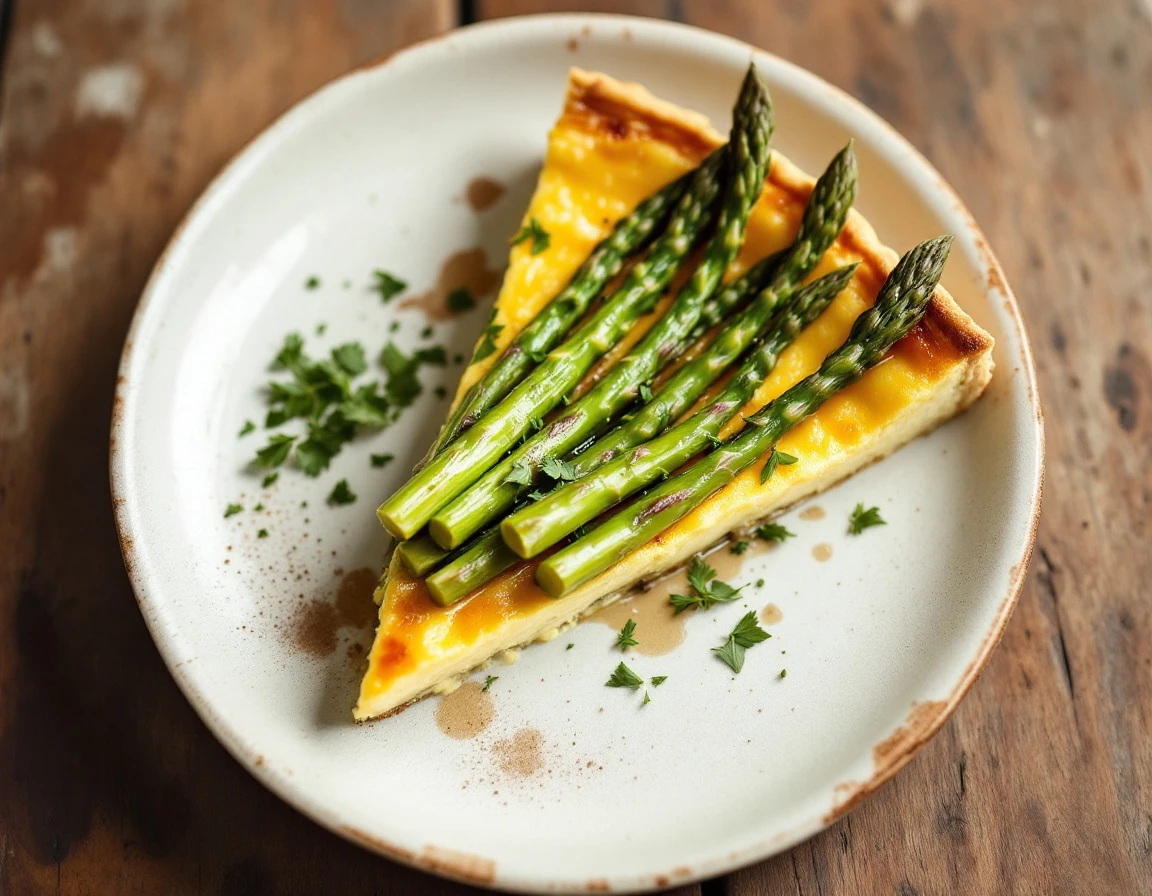
Tender asparagus tips and silky leeks nestle into a custardy filling that sets with just enough wobble to stay luxurious. The crust is buttery and crisp, built with the smear technique so each layer gets full fat distribution. Spring vegetables and eggs do what they do best here: elevate themselves into something that tastes fancier than the effort it takes.
- Prep
- n/a
- Cook
- n/a
- Total
- n/a
- Servings
- 4
- Difficulty
- medium
Ingredients
4 servings
- 1 cupall-purpose flour
- 1/2 tspsalt
- 3/4 stickcold unsalted butter, cut into 1/2-inch cubes
- 1 largeegg, lightly beaten
- 1 mediumleek , quartered lengthwise, then cut crosswise into 1/3-inch pieces
- 1 lbmedium asparagus, trimmed
- 1 tbspunsalted butter
- 1/2 tspsalt
- 1/2 tspblack pepper
- 1 1/3 cupheavy cream
- 3 largeeggs
- 2 tspfinely chopped fresh tarragon
- 2 tspwater
- 1"parchment paper; a 9 1/4-inch flan ring* (see cooks note
- 1below)"
Instructions
In a bowl, work the flour, salt, and butter together with your fingertips or a pastry blender (or pulse in a food processor) until most of the mixture resembles coarse meal with some pea-sized butter lumps still visible. Drizzle the egg evenly across the surface and stir gently with a fork (or pulse in the processor) just until a dough comes together.
Tip the dough out onto a lightly floured surface and divide into 4 portions. With the heel of your hand, smear each portion once or twice in a forward motion to distribute the fat. Gather everything back into a ball, then flatten into a 5 inch disk. Wrap in plastic and chill until firm, at least 30 minutes.
Submerge the leek in a bowl of cold water, agitating to release any grit, then lift out and pat dry.
Bring a wide 4 to 5 quart pot of salted water to a boil. Cook the asparagus uncovered until just tender, about 5 minutes. Lift the asparagus out with tongs into a bowl of ice water to halt the cooking, then drain and pat dry. Cut off the tips and set them aside (leave more stalk on if the asparagus is thin), then slice the stalks thinly crosswise.
Melt the butter in a 10 to 12 inch heavy skillet over moderately low heat until the foam subsides. Cook the leek with 1/4 teaspoon of salt, stirring, until softened, 6 to 8 minutes. Fold in the sliced asparagus stalks and 1/4 teaspoon of pepper, then pull from the heat.
Set an oven rack in the middle position and heat the oven to 375°F.
Line a baking sheet with parchment paper and place the flan ring in the center. Roll the dough on a lightly floured surface with a floured rolling pin into an 11 inch round. Lift the dough into the flan ring, pressing it against the base and sides. Run the rolling pin across the top edge of the ring to trim away any excess dough.
In a bowl, whisk the cream, 2 eggs, tarragon, and the remaining 1/4 teaspoon salt and 1/4 teaspoon pepper together. In a separate small bowl, lightly beat the remaining egg with the water. Brush the tart shell all over with some of the egg wash. Spoon the asparagus-leek mixture into the shell and spread evenly, then pour the cream mixture over the top.
Bake the tart until the filling just begins to set but still feels loose on top, 20 to 25 minutes. Scatter the reserved asparagus tips across the surface, pressing lightly to help them settle into the filling. Continue baking until the custard turns golden and just sets but remains slightly wobbly in the center, about 30 minutes more. The custard will continue to firm as it cools.
Cool the tart on the baking sheet on a rack until warm, about 30 minutes. Loosen the edge with a small sharp knife, then lift off the flan ring. Cut into wedges and serve warm or at room temperature.
Tips from the kitchen
- Blanch the asparagus and shock it in ice water, then pat dry, no matter how tedious it feels. Excess moisture ruins custard and crust. Keep the stalks and tips separate, slicing only the stalks for even texture that won't overshadow the whole tips on top.
- Don't skip the smear step with the dough. Pushing it with the heel of your hand redistributes the fat and keeps the crust tender without overworking it. Work cold, work fast, and the difference is noticeable.
- Tarragon is not optional here. Its anise note anchors the tart and prevents it from tasting one-note or too heavy. Fresh only, chopped fine, stirred in at the end so heat doesn't flatten the flavor.
- Fill and bake the tart no more than an hour after the custard is made or mixed filling will start to weep. The eggs set between 170F and 180F internal temp, not higher, or they scramble. A meat thermometer at the center saves second-guessing.
Variations
- Swap asparagus for thin-sliced zucchini or summer squash, blanched only 2 to 3 minutes so it stays firm and doesn't release water into the custard.
- Use fresh dill instead of tarragon and add a teaspoon of Dijon mustard to the custard base for a sharper, more savory take.
- Skip the leek, double the asparagus, and scatter torn soft herbs like chervil or chives over the top after baking for a lighter spring version.
- Stir crumbled goat cheese or gruyere into the custard mixture and use it with roasted red peppers and herbs for a richer, warmer-season option.
Make ahead and storage
Refrigerate leftovers covered for up to 3 days. Reheat gently in a 300F oven for 10 to 15 minutes until warmed through, or eat chilled straight from the fridge. Do not freeze unbaked or baked tart; custard separates.