Apple-Molasses Upside-Down Cake
From the kitchen of CarlyWarm molasses cake with caramelized apples baked right into the pan. Spiced with cinnamon and ginger, it flips out with all those golden apple pieces on top, creating a rustic, deeply flavored dessert that tastes like fall in every bite.
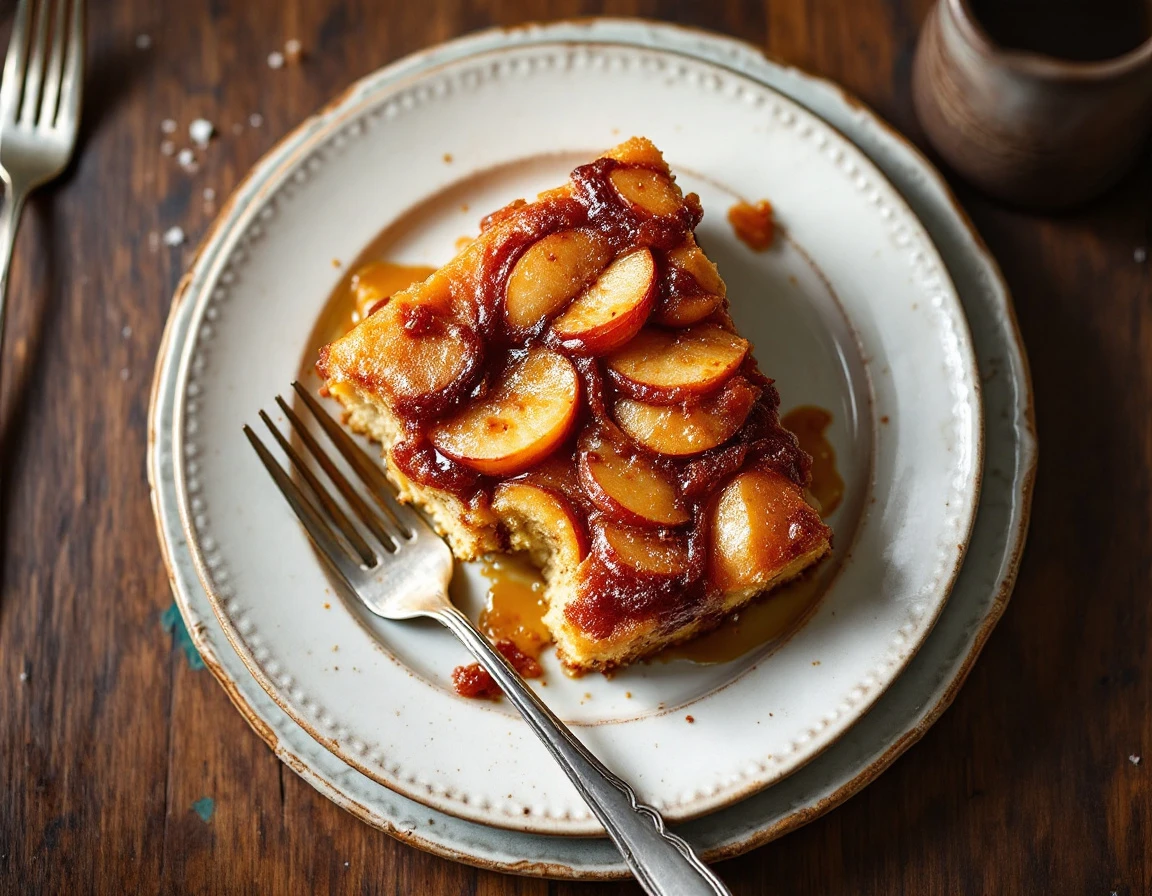
Molasses cake meets caramelized apples in a cast-iron skillet, flipped onto the plate to show off all that glossy, jammy fruit on top. The batter is tender and spiced ginger-forward, barely sweet, so the apples and their syrupy base do the heavy lifting. It's humble enough for weeknight dinner but looks fancy enough to pass off as intentional.
- Prep
- n/a
- Cook
- n/a
- Total
- n/a
- Servings
- 4
- Difficulty
- medium
Ingredients
4 servings
- 5 tbspunsalted butter
- 1 3/4 cupall-purpose flour
- 1 1/2 tspkosher salt
- 1 tspground cinnamon
- 3/4 tspbaking soda
- 1/2 tspbaking powder
- 3/4 cupmild-flavored molasses
- 1 largeegg
- 2 tspgrated peeled ginger
- 1/2 cupsugar, divided
- 1/3 cupsour cream
- 1/4 cupwhole milk
- 3Honeycrisp or Pink Lady apples
- 1peeled
Instructions
Set a rack in the middle of the oven and preheat to 350°F. Melt the butter in a 10-inch cast-iron or other ovenproof skillet (measured across the bottom), then set the skillet aside.
In a medium bowl, whisk together the flour, salt, cinnamon, baking soda, and baking powder. In a large bowl, whisk the molasses, egg, ginger, and 1/4 cup of the sugar until combined, then whisk in the sour cream followed by the milk. Gradually whisk in the dry ingredients, then pour in 3 tablespoons of the melted butter from the skillet. Set the batter aside.
Stand 1 apple upright on a work surface, stem pointing up. Slice a large piece away from one side, cutting around the core rather than through it. Rotate the apple and repeat twice so you end up with 3 large pieces and a triangular core left behind. Work through the remaining apples the same way.
Tip the remaining 1/4 cup sugar into the butter still in the skillet. Cook over medium-high heat, stirring occasionally, until the sugar starts to caramelize, 2 to 3 minutes. Add the apple pieces and stir to coat them in the caramel. Cook rounded sides down for 3 minutes, then flip and cook flat sides down until the apples begin to soften, about 5 minutes more. Arrange the pieces evenly in the skillet flat side down, then pour the batter over the top.
Slide the skillet into the oven and bake until a cake tester inserted into the center comes out with just a few moist crumbs clinging to it, 30 to 40 minutes.
Cool the cake in the skillet for 10 minutes, then carefully invert it onto a plate. Serve warm or at room temperature.
Tips from the kitchen
- Cut your apples into three large pieces each (leaving the core behind) rather than slicing thin, they'll hold their shape and texture better as the cake bakes instead of turning to mush.
- Watch the caramel stage closely, 2 to 3 minutes over medium-high heat. You want the sugar to start turning golden and smell nutty, not burn. If it looks too dark, it'll taste bitter.
- The cake will be most tender if you stop mixing the batter the second the dry ingredients are incorporated. Overmixing develops gluten and makes it tough and dense.
- Let the cake cool in the skillet for exactly 10 minutes before inverting, it needs time to set slightly but still release cleanly from the pan.
Variations
- Bourbon variation: Add 1 tablespoon bourbon to the caramel before adding the apples, it deepens the molasses notes.
- Pear swap: Use firm Bosc or Bartlett pears instead of apples, they caramelize beautifully and add a floral sweetness.
- Brown butter finish: Brown the remaining butter separately and drizzle it over the top just before serving, adds richness and a nutty depth.
- Cranberry twist: Scatter fresh or frozen cranberries among the apples before pouring batter, they add tartness and visual contrast.
Make ahead and storage
Store covered at room temperature for up to 2 days, or wrap and refrigerate for up to 4 days. You can freeze for up to 2 months; thaw at room temperature and warm gently in a 300°F oven to brighten the texture.