Apple Cobbler
From the kitchen of CarlySpiced Gala apples caramelize with boozy raisins in butter and sugar, then top with a tender biscuit crust. The result is rustic, deeply flavored, and perfect with whipped cream on a cold afternoon.
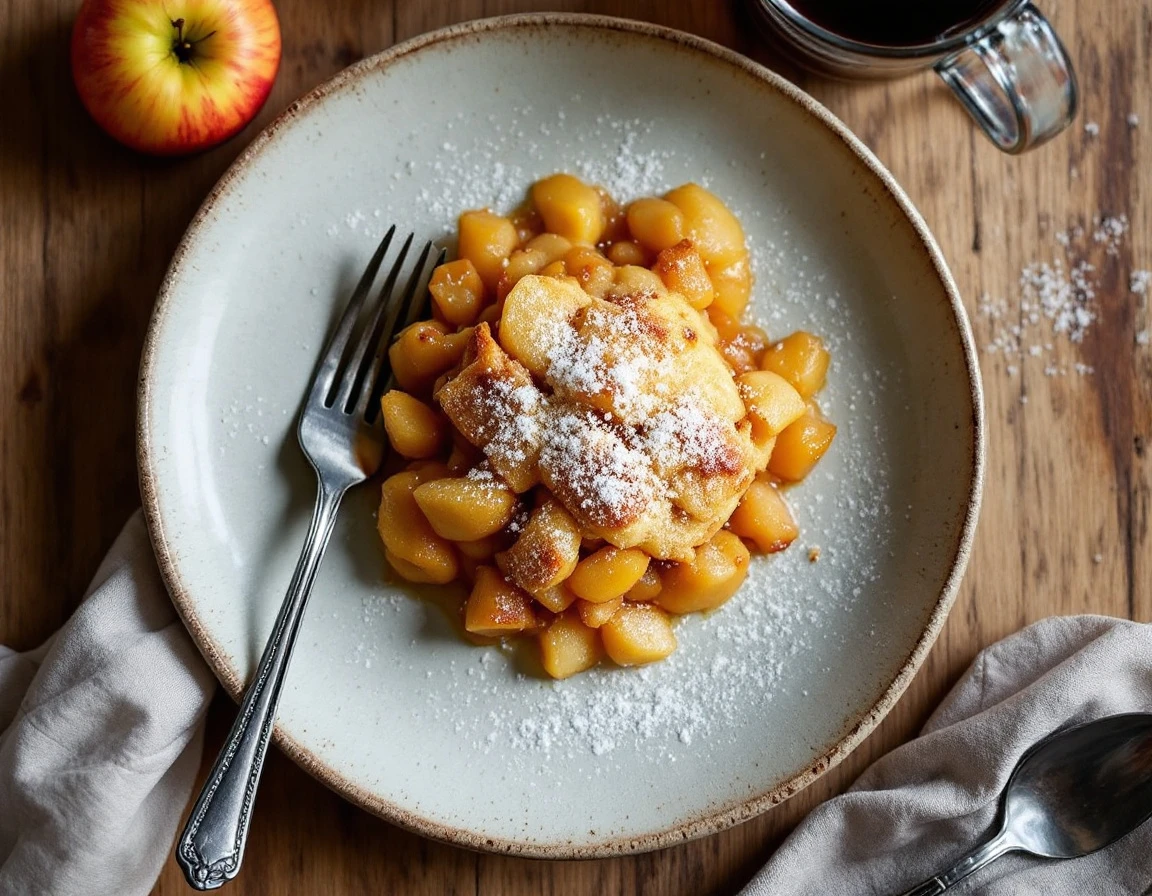
Calvados-soaked raisins and deep caramel apples crowned with buttery cut-out biscuits, all built right in a cast-iron skillet. The trick is letting those apples color hard on the stovetop without stirring, so the juices turn glossy and amber. This one gets assembled in stages but the payoff is a cobbler that looks finished, tastes luxurious, and comes together faster than you'd expect.
- Prep
- n/a
- Cook
- n/a
- Total
- n/a
- Servings
- 4
- Difficulty
- medium
Ingredients
4 servings
- 1/2 cupgolden raisins
- 1/2 cupCalvados or apple brandy
- 3 1/2 lbGala apples
- 1 1/2 tbspfresh lemon juice
- 1/2 stickunsalted butter
- 3/4 cupgranulated sugar
- 1 1/2 cupall-purpose flour
- 2 tspbaking powder
- 1Rounded 1/4 teaspoon salt
- 3/4 cupplus 1 tablespoon heavy cream, divided
- 1 1/2 tbspturbinado sugar such as Sugar in the Raw for sprinkling
- 1Equipment: a well-seasoned 10-inch cast-iron skillet; a 2 1/4-inch round cookie cutter
- 1heavy cream
Instructions
Combine the raisins and Calvados in a small saucepan over medium heat and simmer until the liquid reduces to 3 tablespoons, about 4 minutes. Pull the pan off the heat, cover it, and let the raisins macerate for 30 minutes.
Position a rack in the middle of the oven and preheat to 425°F.
While the raisins soak, peel and core the apples, cut them into 1-inch pieces, and toss with the lemon juice.
Melt the butter in the cast-iron skillet, then scatter the granulated sugar evenly over it. Pile in the apples along with the raisins and all the Calvados, the skillet will be very full. Cook over medium-high heat without stirring until the juices turn deep golden and bubble vigorously, 18 to 23 minutes (uneven coloring is fine). Slide the skillet into the oven and bake uncovered for 20 minutes.
In a bowl, stir together the flour, baking powder, and salt, then pour in 3/4 cup of the cream and stir just until a shaggy dough comes together. Shape it into a ball and turn it out onto a lightly floured surface. Knead gently 6 times, then pat the dough into an 8-inch round. Stamp out as many rounds as possible with the lightly floured 2 1/4-inch cutter, gather the scraps, pat them out, and cut more rounds. You should have about 12 total.
Nestle the biscuits on top of the apples, spacing them about 1/2 inch apart. Brush the tops with the remaining 1 tablespoon of cream and dust with the turbinado sugar. Bake until the biscuits are puffed and golden, about 15 minutes, then let the cobbler cool in the skillet for 20 minutes before serving.
Tips from the kitchen
- Don't stir the apples while they caramelize on the stovetop. That deep golden, unevenly colored juice is exactly what you want, and it won't happen if you move them around.
- The biscuit dough should come together quickly. If you overwork it or add too much cream, they'll be tough. Knead just 6 times and cut your rounds with a light hand.
- Arrange biscuits with a half-inch of space between them so they puff up independently. Crowding them means dense, undercooked centers.
Variations
- Skip the Calvados and double the apple juice or cider for a non-alcoholic version, but soak the raisins in hot liquid for 10 minutes instead of simmering them.
- Use bite-sized biscuits instead of cut-out rounds: drop spoonfuls of biscuit dough directly onto the apples and bake as directed.
- Swap bourbon or rum for the Calvados, or use dried cherries instead of raisins for a different flavor profile.
- Make this in individual skillets or ramekins for an elegant plated dessert, adjusting baking time down by a few minutes depending on size.
Make ahead and storage
Cobbler keeps covered in the fridge for up to 2 days. Reheat gently in a 300°F oven for 10 to 15 minutes until warm through. Freezing the whole thing isn't ideal because the biscuits get dense on thaw, but you can freeze leftover biscuit dough separately for up to 3 months.