Ambrosia Layer Cake
From the kitchen of CarlyCitrus-bright layer cake with tender crumb and orange zest threading through every bite. Creamed butter and sugar give this classic its signature fluffy texture, while fresh orange keeps things lively and sophisticated. Perfect for celebrations that deserve something special.
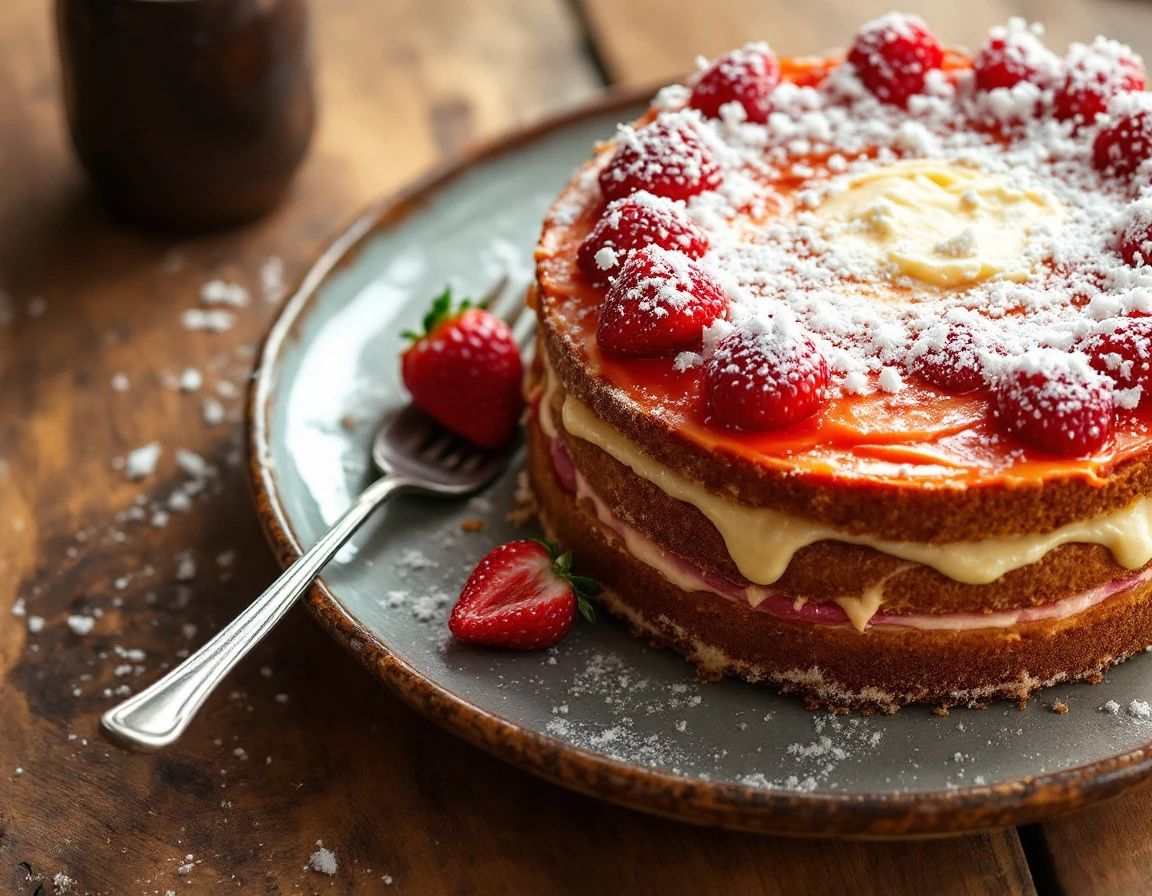
A three-part cake that rewards patience: soft, moist crumb soaked in bright citrus curd, topped with toasted coconut and silky Swiss meringue. The orange and lemon cut through the sweetness while coconut adds textural depth. This is the kind of cake that tastes like spring and holds up for days, actually getting better as the curd sets.
- Prep
- n/a
- Cook
- n/a
- Total
- n/a
- Servings
- 4
- Difficulty
- medium
Ingredients
4 servings
- 2 3/4 cupsifted cake flour
- 2 1/2 tspbaking powder
- 1/2 tspsalt
- 1 1/2 stickunsalted butter, softened
- 1 1/2 cupsugar
- 4 largewhole eggs, at room temperature for 30 minutes
- 1 tbspfinely grated fresh orange zest
- 1 1/2 tspvanilla
- 1 cupwhole milk
- 2 largewhole eggs
- 3/4 cupsugar
- 1/4 cupcornstarch
- 3/4 cupwater
- 1/2 cupfresh orange juice
- 1/4 cupfresh lemon juice
- 3 tbspunsalted butter
- 2 tspfinely grated fresh orange zest
- 1 bagsweetened flaked coconut
- 2 largeegg whites
- 1 cupsugar
- 1/4 cupwater
- 2 tsplight corn syrup
- 1 tspvanilla
- 1 tspfresh lemon juice
- 2round cake pans
Instructions
Slide the oven rack into the middle position and bring the oven to 350°F. Coat the cake pans with butter and dust with flour, tapping out whatever excess clings to the sides.
Through a fine sieve, pass the 2 3/4 cups of flour together with the baking powder and salt into a bowl.
In a large bowl with an electric mixer running at medium-high speed (use the paddle attachment if you have a stand mixer), cream the butter and sugar together for 3 to 5 minutes, until the mixture lightens to pale and goes fluffy. Add the eggs one at a time, beating each in before the next goes in. Mix in the zest and vanilla and keep beating for another 5 minutes. Now drop the speed to low. Add the flour mixture in 4 separate batches, alternating with the milk between them. Start with flour and end with flour. Mix only until the batter goes smooth, no more. Divide between the prepared cake pans, smoothing the surfaces.
Bake the cake layers until they begin pulling away from the sides of the pans and a wooden pick or skewer pulled from the center comes out clean, 20 to 25 minutes. Let cool 5 minutes in the pans on racks, then flip each layer onto the rack and let them cool completely. Keep the oven on; the coconut still needs toasting.
Whisk the eggs together in a heatproof bowl just until evenly combined.
Using a clean, dry whisk, stir the sugar, cornstarch, and a pinch of salt together in a 1 1/2 to 2 quart heavy saucepan. Whisk in the water and juices until everything turns smooth. Bring to a boil over moderate heat, whisking, then lower the flame and keep the mixture at a bare simmer, whisking nonstop, for 2 full minutes. The texture should thicken visibly.
Stream half of the hot juice mixture into the eggs slowly, whisking the entire time to temper. Pour that warmed egg mixture back into the saucepan with the rest of the juices and cook over moderately low heat, whisking, just to the boiling point. Take the pan off the heat and stir in the butter and zest, whisking until the butter disappears. Press a buttered round of wax paper (buttered side down) onto the surface of the filling and refrigerate until cold, about 30 minutes.
Scatter the coconut across a shallow baking pan and toast in the oven, stirring now and then, until golden, 12 to 15 minutes.
Tip the egg whites into a large metal bowl with the sugar, water, corn syrup, and a pinch of salt; beat with a handheld electric mixer (use clean beaters) until combined. Set this bowl over a saucepan with simmering water and beat at high speed for 5 to 7 minutes, until the frosting holds stiff, glossy peaks. (Humid days may stretch this a touch.) Pull the bowl from the heat. Add the vanilla and lemon juice, then keep beating until the frosting cools down and grows very thick, another 6 to 10 minutes.
Using a long serrated knife, halve each cake horizontally. Place one layer on a cake stand or large plate and cover with roughly 3/4 cup of the filling. Stack the remaining layers, smearing about 3/4 cup of filling onto each. Cover the top and sides with the frosting, then coat the whole cake with toasted coconut, pressing the flakes in gently to make them stick.
Tips from the kitchen
- Sift your cake flour before measuring, not after. This sounds fussy but it matters for tender layers. Room-temperature eggs beat into the batter with less effort and incorporate air more efficiently, so pull them out 30 minutes ahead.
- The curd is properly cooked when it coats the back of a whisk and a finger dragged through it leaves a trail. Undercook it and it won't set between the layers; overcook it and you'll scramble the eggs.
- Toast the coconut while the cake cools so it's warm and fragrant before assembly. It only takes 8 to 10 minutes at 350°F, but watch it because it goes from golden to burnt fast.
Variations
- Skip the Swiss meringue and use unsweetened whipped cream instead, which is less fussy and lets the curd shine through.
- Swap half the orange juice for passion fruit puree or lime juice if citrus needs change with the season.
- Make it a tart instead: bake the cake layers in a single 9-inch pan and use the curd as a filling in a pre-baked pie shell, then crown with toasted coconut.
Make ahead and storage
Refrigerate the assembled cake, uncovered, for up to 4 days. The curd will continue to set and the flavors will deepen. Don't freeze this one, the curd weeps when thawed.