All–Butter Pie Dough
From the kitchen of CarlyTender, flaky pie dough built on cold butter and red wine vinegar. The vinegar adds subtle tang while keeping the crust impossibly crisp. This all-butter version delivers rich flavor and shatters under your fork.
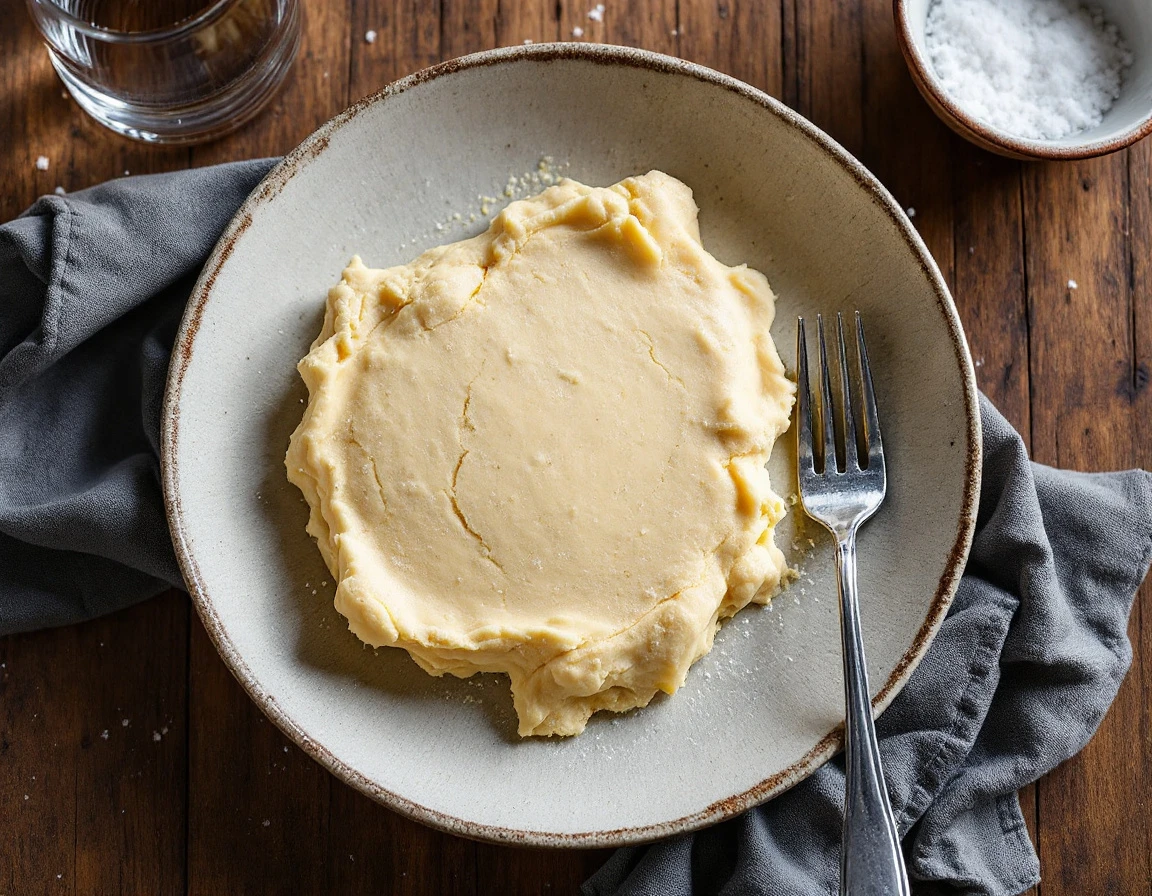
Butter is the whole story here, and two different temperatures do the work: frozen bits stay intact and create flaky layers, chilled butter gets cut in smooth for tenderness. Red wine vinegar chills the dough and adds a whisper of tang that rounds out the salt. The trick is not overthinking it in the food processor, letting your hands bring it together at the end.
- Prep
- n/a
- Cook
- n/a
- Total
- n/a
- Servings
- 4
- Difficulty
- medium
Ingredients
4 servings
- 1 3/4 stickunsalted butter, divided
- 1 tbspred wine vinegar
- 1/2 cupcold water
- 2 1/4 cupall-purpose flour
- 2 1/4 tspkosher salt
- 1/2 tbspgranulated sugar
Instructions
Cut all the butter into 1/2-inch (13-mm) cubes. Pop 5 tablespoons (70 grams) into the freezer for at least 20 minutes or overnight, and keep the remaining 1 1/8 sticks in the refrigerator until you need them.
Stir the red wine vinegar into the cold water and set the mixture aside.
Combine the flour, salt, and sugar in the bowl of a food processor and pulse 5 or 6 times to bring everything together.
Scatter in the chilled butter and run the processor for 25 to 30 seconds, until the mixture looks like coarse meal.
Now add the frozen butter and pulse 15 to 20 times, until the pieces are roughly pea-sized.
Pour in 6 tablespoons of the vinegar water and pulse 6 times. The dough should turn crumbly at this point. Pinch a small amount in your palm: if it holds together easily, you are done. If it crumbles apart, add 1/2 tablespoon of the vinegar water, pulse 3 more times, and test again. Keep repeating until the dough holds.
Turn the dough out onto a lightly floured surface and knead it together until smooth. It should never fully come together inside the food processor.
Split the dough into 2 equal portions and shape each into a ball, then press them into slight discs. Wrap each one separately in plastic wrap and refrigerate for at least 20 minutes, though overnight is better.
Tips from the kitchen
- Freeze the 5 tablespoons as a solid block if you can, then grate it on the large holes of a box grater into the dry mix instead of pulsing. Faster, colder, less overworking.
- The vinegar water matters more than you'd think. It relaxes the gluten so the dough doesn't shrink like crazy when it bakes, and it keeps everything cold.
- Don't skip the hand-knead at the end. It brings the shaggy bits together without activating gluten the way the food processor would. Twenty to thirty 'squishing' motions does it.
- If your kitchen is warm, chill your food processor bowl and blade for 15 minutes before you start.
Variations
- All-vodka dough: Replace the vinegar water with cold vodka and water in a 1:1 ratio. Vodka won't develop gluten the way vinegar does, so you get even more tender crust.
- Herb version: Pulse 1 tablespoon of fresh thyme or sage, finely chopped, into the flour mix before you add any butter.
- Lard blend: Swap half the butter for high-quality lard (90 grams each). You lose some richness but gain a shaggier, more tender crust that bakes paler.
- Sourdough starter dough: Replace 2 tablespoons of the water with unfed sourdough starter and reduce the salt to 2 teaspoons. Gives the crust a subtle tang and better browning.
Make ahead and storage
Wrapped dough keeps in the fridge for up to 3 days, or freeze for up to 3 months. Let frozen dough thaw slightly in the fridge before rolling out.